
“And now, I need Agatha Christie.“
I wrote, and said that, to myself when I closed the latest book that I read; a popular work of “murder mysteries” which somehow signed as horrors, and a confirmation that one should start writing on their personal space first before trying their hands to publish a publicly available book. Or choose a stricter editor.
So! I have two more boxset of Agatha Christie’s works here:
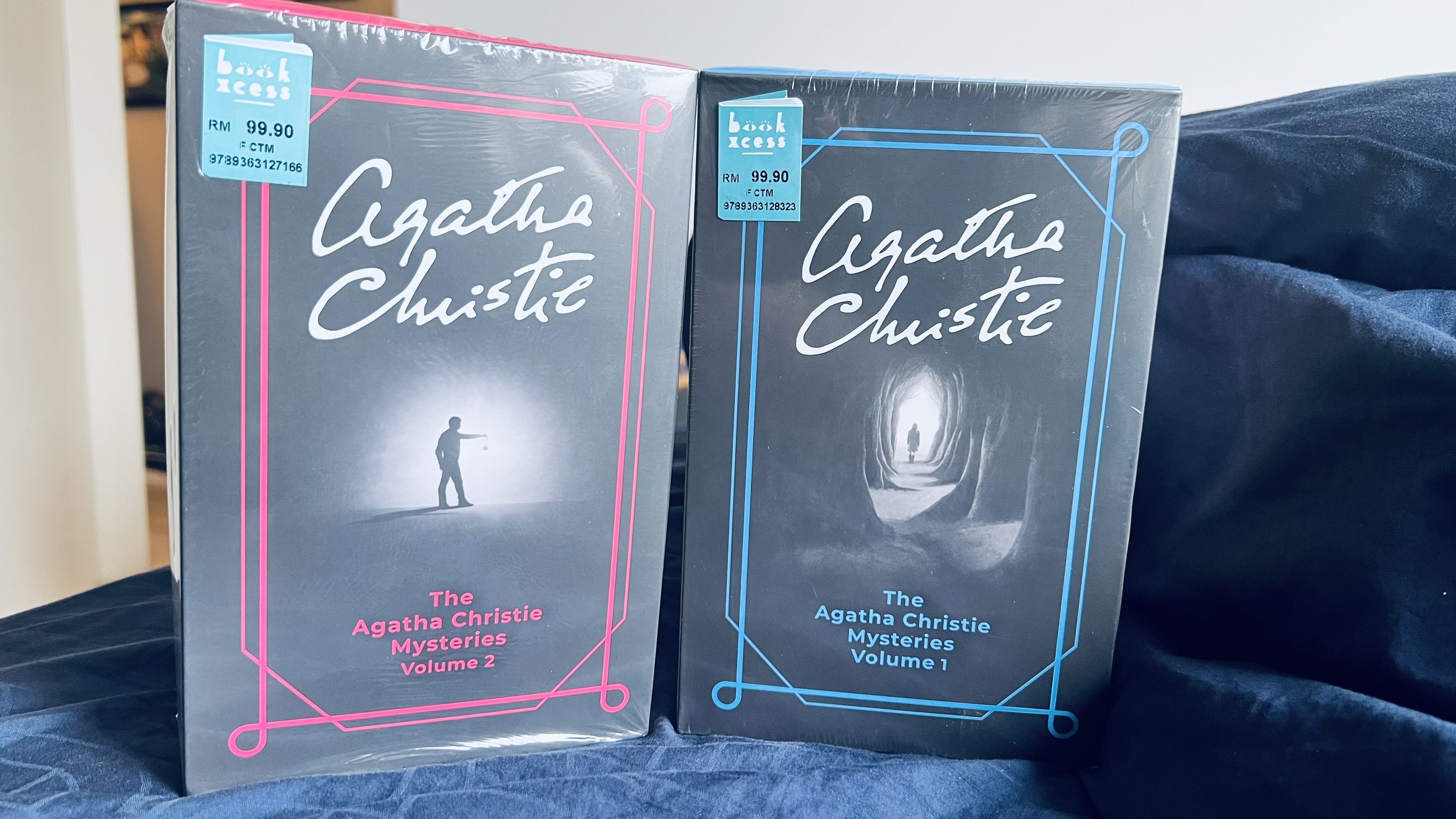
Each box consists of five novels. I then started with boxset Volume 1. In it, there are five titles: “The Mysterious Affair at Styles”, “The Murder on the Links”, “The Murder of Roger Ackroyd”, “The Big Four”, and “The Mystery of the Blue Train”. I chose “The Mystery of the Blue Train” as a start because, uh, trains. While I’m not well-versed in trains and train engineering technically, trains have a soft spot in my heart. Midway in reading, I just realized that the first book that Agatha Christie published was “The Mysterious Affair at Styles”, so, well, oops. I’m going to read that one after this.
Then suddenly Katherine had a very curious sensation. She felt that she was no longer sitting alone on the seat in the Casino gardens, but that someone was standing beside her, and that that someone was the dead woman, Ruth Kettering.
— The Mystery of the Blue Train: A Warning
I found it unusual to see a supranatural element, or any of it, on Agatha Christie’s works, but I genuinely appreciate her skills in putting together this fleeting otherworldly scene with a tight-knit explanations and logic. Perhaps, this is her way in showing Katherine’s keen senses, considering Katherine’s previous job as a companion for old ladies and her skill in listening to others, including her surroundings.
That said, I first thought “The Mystery of the Blue Train” would be similar to “Murder on the Orient Express”; a draft, if you will, considering the latter was published in 1934, a good six years after “The Mystery of the Blue Train”. Perhaps, perhaps, the idea sprang from there, I guess?

Throughout this novel, I got brought back-and-forth from Paris, the Calais-Mediterranée Express, and the French Riviera. Honestly, the only bad influence this book gave me was another itch to travel using luxury trains.
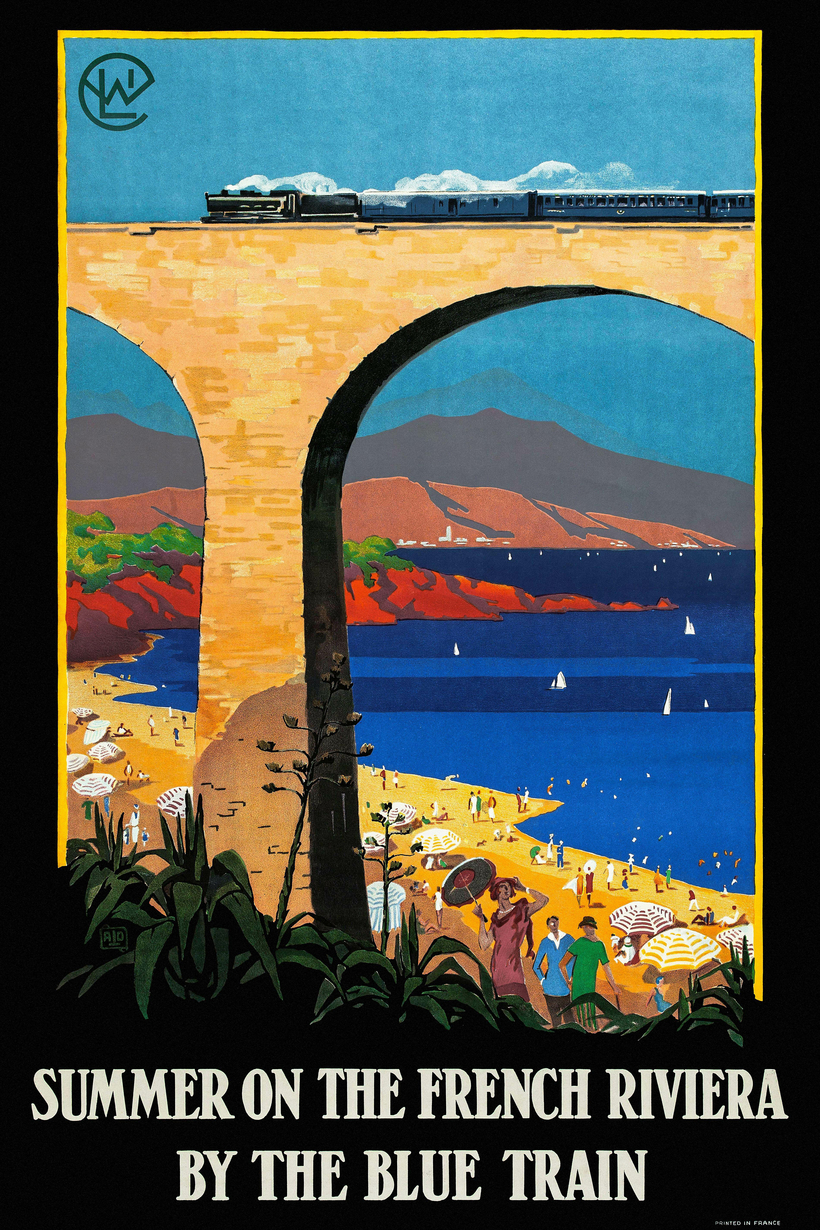
I live in the tropics, so it’s not hard to imagine the mighty sunshine pounding down the white sands and azure seas, hahah! It makes me miss Langkawi, honestly.

I also love how the characters in the novel were introduced in such grace and without a rush. We saw them entering a building or enjoying lunch. I love how restrained and controlled the plot feels. In some scenes, we see the characters took their time. In others, we see furnitures flung around.
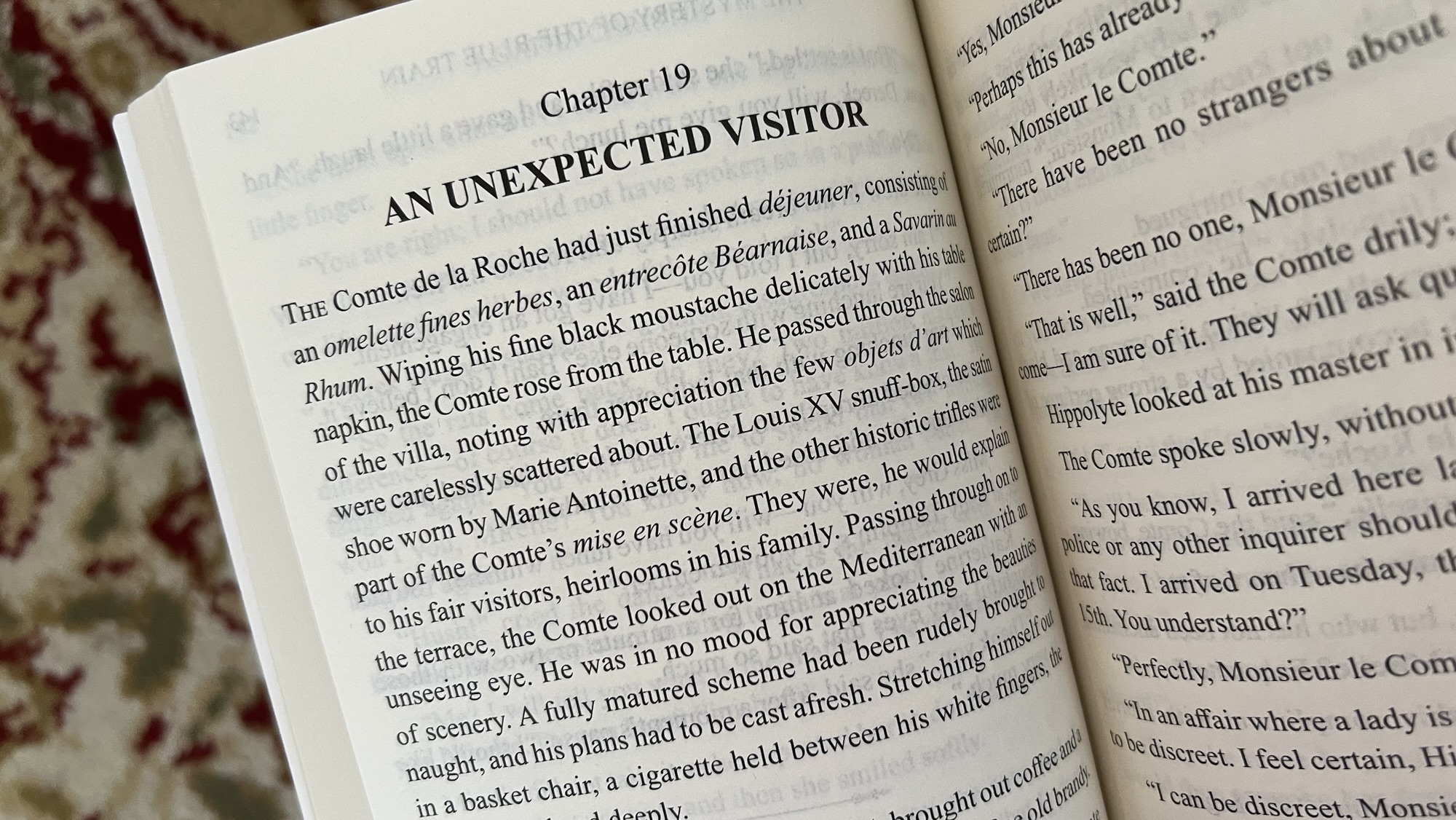
One thing that interests me was the introduction of the character Lenox Tamplin. Somehow, her character was portrayed as less than favorable here.
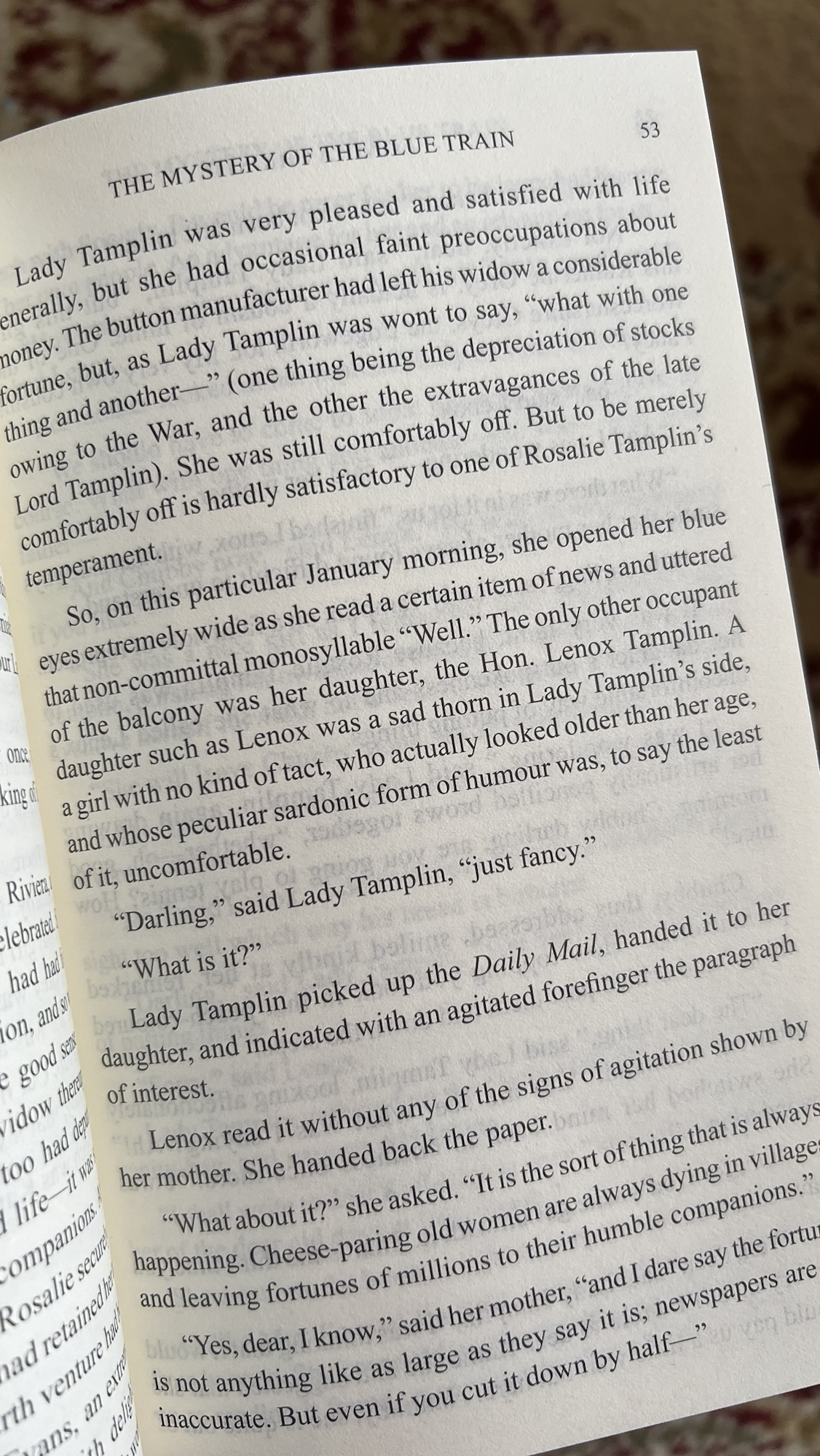
The only other occupant of the balcony was her daughter, the Hon. Lenox Tamplin. A daughter such as Lenox was a sad thorn in Lady Tamplin’s side, a girl with no kind of tact, who actually looked older than her age, and whose peculiar sardonic form of humour was, to say the least of it, uncomfortable.
I legit thought that her character would be on par with The Bennets women from Jane Austen’s “Pride and Prejudice”. Who can forgot how Mrs. Bennet and Bennet sisters (except for Elizabeth and Jane) behaved during the Netherfield Ball, amirite?
So. Yeah. I was surprised to see how… pleasant Lenox is. She’s someone that I wouldn’t mind to spend summer in French Riviera, for sure! I love her jabs and quips whenever her mom starting to show her readiness to pounce at anyone with slightly thicker pockets around. Perhaps because I looked at her character from my 2026’s perspective, which made me feeling fond of her. Lenox, they would love you here in the future.