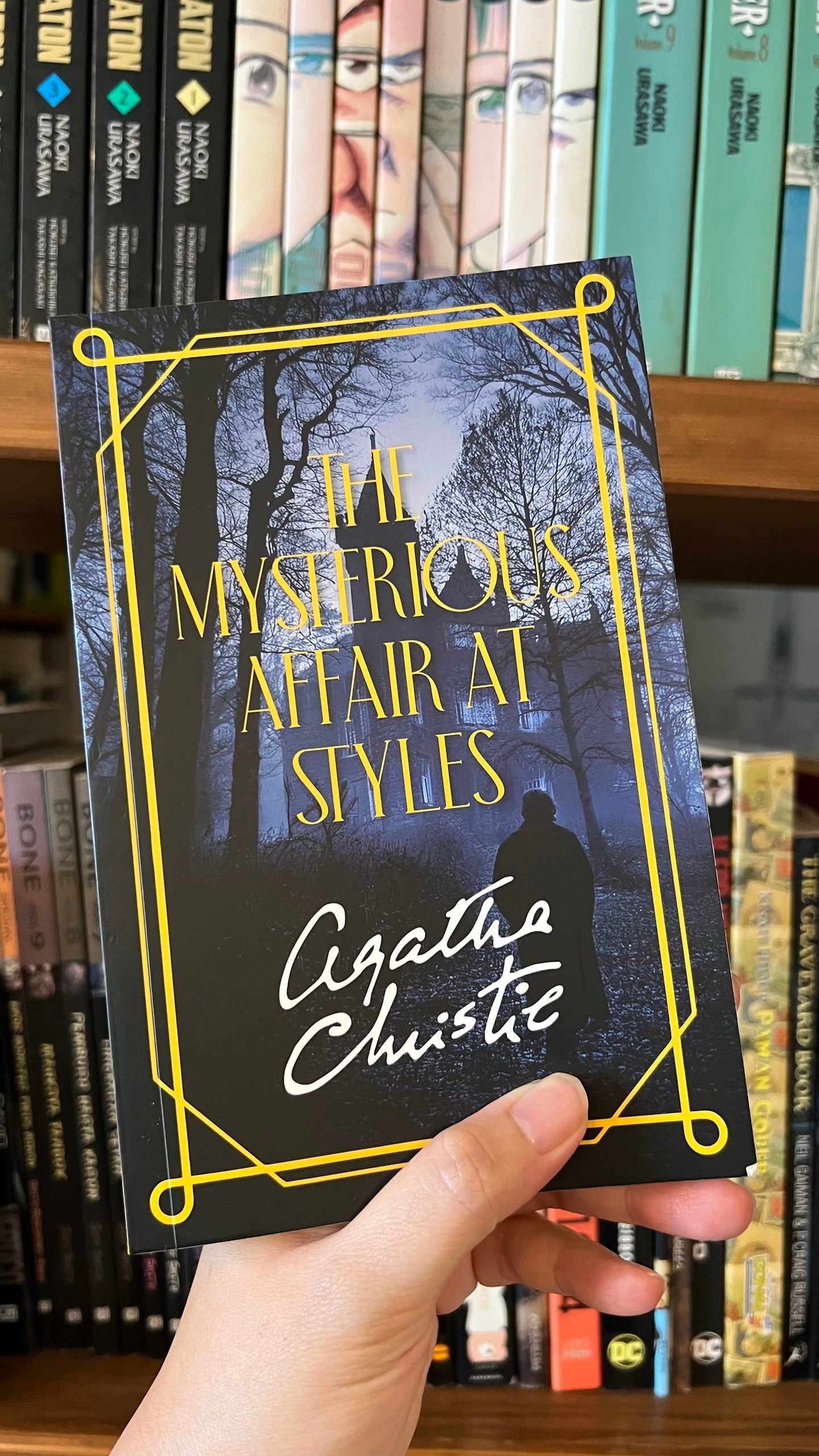
• Yes, the second book of the trio.

    Just like its siblings, I qualified this book as a quick read. I spent roughly 90 minutes reading this one, post-dinner. After two books, I found myself asking this question: Horror where?

    I… don’t understand why they marketed the trilogy as horrors. I’m a wimp, and I even found “Scary Movie” franchise still scary, so it took quite an undertaking on my end to brave myself getting this book (well, mostly due to the booktok had been hyping up this series) and I admit that I feel relieved that whew no ghost.

    In terms of writing technique, the second book is more fleshed out than the previous one, “Strange Houses”, for sure. We no longer see the conversationalist style and we got proper paragraphs and dialogues.

    And just like the title suggested, the main focus of this novel is the pictures that “mean more than what they seemed”.

    So! Do I find this book better than the other one? In some ways, yes. We see the story shaped better with more information and details, and I particularly loved the characters’ depth at the latter part of the book. It looked like Uketsu was “in the zone” when they wrote that part, because I could sense the emotions evoked from the pages and the struggles that each character is facing.

    However, I am still unable to get myself immersed in the mystery, simply because of how convoluted and weird it was, in a not-so-great way. Too many things going on and too many “clues and directions and misdirections”. Yes, murder mysteries and thrillers need to be tricky and convoluted, but this one was just… Too much, in a sense of too preachy. Instead of having the readers actively joining into the case, this book feels like asking for the readers to take the sideline and be a passive spectator.

    Now, speaking about misdirections, remember how I asked for red herrings on my previous post because we the readers need some misdirections for the grand twists? I wonder if Uketsu attempted to do this on this book. Ironically, instead of a proper red herring, it was… “even if that thing was not there, the story can still progressing nicely.” Especially on the chapter on the apartment building picture. It was… WHY is that picture even there with such weird drama surrounding it? The pictures used as the center of mystery feel so gimmicky and forced. It feels trying too hard to be smart, but ended up causing confusion and a lot more “uketsu strange pictures explained” search keywords on Reddit. I legit turned into the Screaming Marmot Meme mid-reading. I was that frustrated.

    Also, the words. I don’t know if it’s because this novel is a translated work, but the words used are so… simple. It was painfully simple, it felt juvenile. I’m starting to think this is Uketsu’s style: Juvenile readers. In a much sinister approach, I genuinely feel that this series is like a first-draft-but-publish-it-at-all-cost, and honestly, I feel it’s an insult to the readers and those who genuinely enjoying horrors, thrillers, and murder mysteries. I don’t know what happened with Uketsu, their publisher, and the marketing in general, but I daresay that this kind of writing might be better if it’s developed on personal level at first; such as, blog, AO3, Wattpad, a series of Threads posts, whatever. As the time goes by, the story could be built better, received feedback properly real-time, and general improvements on the technique and prose. On this current level, I personally would say that this is a good book for young/teenager readers.

    Writing this makes me wonder if I should start incorporating meme to sum up my whole opinions and thoughts about a book.

    Anyway. Next one, the last one I hope, “Strange Buildings”. Anyway, TIL that “Strange Houses” and “Strange Buildings” are the whole series (“Strange Buildings” as “Strange Houses #2”). “Strange Buildings” just recently published, so hopefully it’s better than the previous two.

  • Seeing the person behind the piece

    It seems like for this type of person, the human being behind it doesn’t count at all. Every “content” someone puts out is a meme; further ammo to use to further their view on their own situation, or as self-promotion on their own internet presences. The source is forgettable and irrelevant, because in 5 minutes, they’ll find the next thing to consume. Single use entertainment. It’s just words written by someone else to take into their mouth and spit at the feed.

    Ava — seeing the person behind the piece

  • This book, “Strange Houses”, is a part of a trilogy: Strange Houses, Strange Pictures, and Strange Buildings. I noticed that the “Strange Houses” book has been having more popularity than the other two, at least in Kinokuniya Suria KLCC, which perhaps due to this title was the debut title of the writer, Uketsu.

    Uketsu is a writer, singer, and YouTube persona of unknown identity. They usually show themselves in black clothing with a white papier-mâché mask and have their voice changed. They usually talk about horrors and mysteries on their YouTube channel, so them writing thriller and mystery novels would be on point.

    I still have a really limited experiences and views of Japanese thrillers and mystery literatures. So far, I have been reading the works by Hisashi Kashiwai (The Kamogawa Food Detective), Soji Shimada (The Tokyo Zodiac Murders), and Keigo Higashino (Newcomer). Hence, I wouldn’t say that J-mystery genre has always have a very specific style (I mean, I obviously need to read more to say that!), but I have been noticing how Japanese authors for this genre have been really good in building the suspense and eerie feelings. From what I see here, these Japanese works are layered in such a way that something as mundane in one’s daily life as eating a takeout soba would be followed by an in-depth discussion or surprising findings. I wonder if this is because Japan has honne and tatemae culture: What you see on the surface is rarely the truth. That kind of “you might not realize it yet…”-feeling between the pages rests uncomfortably in your mind.

    I also found Uketsu’s way in writing interesting. Instead of using paragraphs or regular dialogues, it feels like reading a script as it’s using conversational-style.

    As someone who enjoys details and descriptive language, this work feels… quick. In every sense. The good side, it makes this book a quick read. This conversationalist style reminds me of comics/manga, and I wonder if Uketsu is using this kind of style because their background as a YouTuber gives them a good understanding on how to keep their audience stays focused.

    Throughout this novel, you would see the diagram of the houses in question, and I feel that it’s such a nice touch to have as it hammers down the puzzle aspect of this novel.

    Now, about the plot/story. Was it bad? Not really, no. But the whole thing felt like being forced upon in such “solemn and ceremonial seriousness” and we, the readers, have to follow through. The plot felt “convenient”, quick for the sake of being quick, and there was not a lot of thinking going on in the side of the readers. It was all “a room without windows! Murder room!” or “the child did it! Obviously!” I mean, I got multiple theories in my head, thanks to CSI and Law & Order series, and perhaps we could have red herrings? Please, sir, may I have a crumb of red herrings? I’m clanking my imaginary empty tin can here for a couple more red herrings because WE NEED THE TWISTS AND TURNS FOR GOD SAKE.

    The half part of the novel leading to the end got even more rushed with sudden mentions of dozens other characters, which reminds me of C-dramas where suddenly all other characters appeared by the end of the series. Such situation, ironically, made the latter part of the novel seemingly underwhelming because instead of actually staying on the course, I found myself went, “eh? Who’s this again?”

    NOW! The resolution. I admit, I’m not a huge fan of it. Let’s just say that by the point we learned about the motives, I had to pull my eyes up from the book, look at the ceilings, and muttered a loud, “what?!”

    My reaction. Honest to God, this was my reaction.

    This whole work, dare I say, reminds me of “The Kindaichi Case Filesmanga. Creepy? Check. Eerie? Check. Guessing-games which, conveniently, turned out to be true all the time? Check. Slightly outlandish? Double checks. Also, I can’t believe I’m going to say or write this as this would be so offensive, coming from someone whose comfort movie is Tom Hanks “Da Vinci Code” but here we go, juvenile minds would love this work as it has a lot of glitz and glams (“oooo! Mysterious rooms!”, “creepy guy!”) but that’s it. At least that’s what I feel about “The Kindaichi Case Files” right now. It was great when I read them back in my high school era, but I might find them cringey now.

    I still have two more books from Uketsu. Let’s see how it goes later. Some folks said that “Strange Pictures” is a tad better.

  • Last night, I scrolled on my YouTube app to find something to watch (I have been working on spending more time at long-form media instead of quick dopamine hits/doomscrolling) when I found that TV Tokyo has been uploading full episodes of “Solitary Gourmet” on YouTube. This series is one of my favorites, and I mentioned it once on this blog as one of the recommendations.

    I used to watch this series back in Indonesia on the WakuWaku Japan channel. That channel, alongside NHK World, was one of my favorites, and I used to watch it while having lunch with Wira when he was still a baby, hahah.

    On YouTube, you can choose to have the English-dubbed dialogue or the original Japanese language and have the Closed Captioning (CC) feature active and set to English, which, I did the latter. I always feel that watching series with its original language is the way to go as the dialogue and expressions conveyed better.

    However, I must inform you that with all other Japanese works, there’s always a catch — and I really don’t understand why they keep doing this: For international viewers, only the first season is available. For some reason, videos from other seasons are hidden.

    Why I said, “– they keep doing this”, is because historically, J-entertainment has been making it hard for itself to open up to the international market. Back when I was still in uni, it was always either you buy original music CDs online from Taiwan or China at an exorbitant price, or go to some “music stores” in some dingy alleys in Jakarta selling CD music with a sign “kualitas ori” (“original quality”) written on it. Things have been much better now, yes, but it still has its own hurdles. I’m honestly hoping that Netflix would take this series, though. I mean, it’s like the last cry for help since I mentioned Netflix.

  • Back to baking!

    I used to bake a lot. Despite my usual protests and grievances about baking, as baking is a precise art whereas cooking is a whole YOLO approach, I used to bake because I felt like we could always have more spinach quiche and chewy chocolate cookies in the world. That said, I stopped baking back in 2019, “coincidentally” with the time I started my job at Automattic, since the job occupied most of my time and energy.

    Fast forward to 2026, now I have a teenager and a pre-teen in the house, and anyone with teenagers growing up would know that the concept of the digestive system is nonexistent for them, as their whole being seems to consist of multiple black holes of the galaxies. RIP our grocery shopping budget. Hence: Baking. Homecooked meals and snacks.

    I (re)started with the easy ones: Peach cobbler.

    The recipe was from Khairul Aming, a Malaysian food content creator and businessperson. He is really famous in Malaysia with his “30 Hari 30 Resepi” (Thirty Days, Thirty Recipes) during Ramadan, and this one, peach cobbler, is from this year’s series: Peach Cobbler Resepi Mudah untuk Moreh.

    I personally love this recipe because it’s pretty easy and you don’t have to be super precise in measurement. It’s also quite forgiving in a sense that you can use canned peaches and still get a really nice dessert afterwards. Most of the ingredients mentioned are easy to be found in Malaysian and Indonesian supermarkets, too.

    Next would be Betty Crocker’s chocolate chip cookie premix. Premix, because I initially bought it for the kids’ previous term break so Rey could have some activities at home, but the break passed by with the premix package still sitting nicely in our pantry. While the premix helped with make things waaaaay easier, it reminds me of why I am not super favorable to chocolate chocolate (yes, two “chocolates”) chip cookies. Reason being: It’s hard for me to see whether the cookies are ready or not.

    Thankfully, my kids didn’t really complain much about the cookies. They still managed to polish off the cookies in no time as their after-school snack.

    And just yesterday, I baked my own chocolate chip cookies. The recipe is from Sally’s Baking: Chewy Chocolate Chip Cookies. Chewy chocolate chip cookies are our favorite, and this recipe is the recipe I have been holding on to for years.

    My goal with the cookies is to have them as “snack of the week”, but since I just saw Rey finish a whole small jar of cookies in one go for breakfast (we got like three-ish jars of cookies), I honestly doubt that the cookies would manage to get through this weekend. I do have a plan to bake sticky date pudding, though!

readme.txt

This is my personal blog, so anything goes. This blog has been around since 2014, which means you would, and could, see my past writings with different perspectives and mindsets at that time. This blog is a record-keeping of what I was, what I am, and what I will be. What I wrote in the past might not reflect who I am right now, nor me revisiting the topic.

While things here are generally PG-13, I must remind you that I’m an adult, which means some topics might be too heavy for younger readers.

Listening