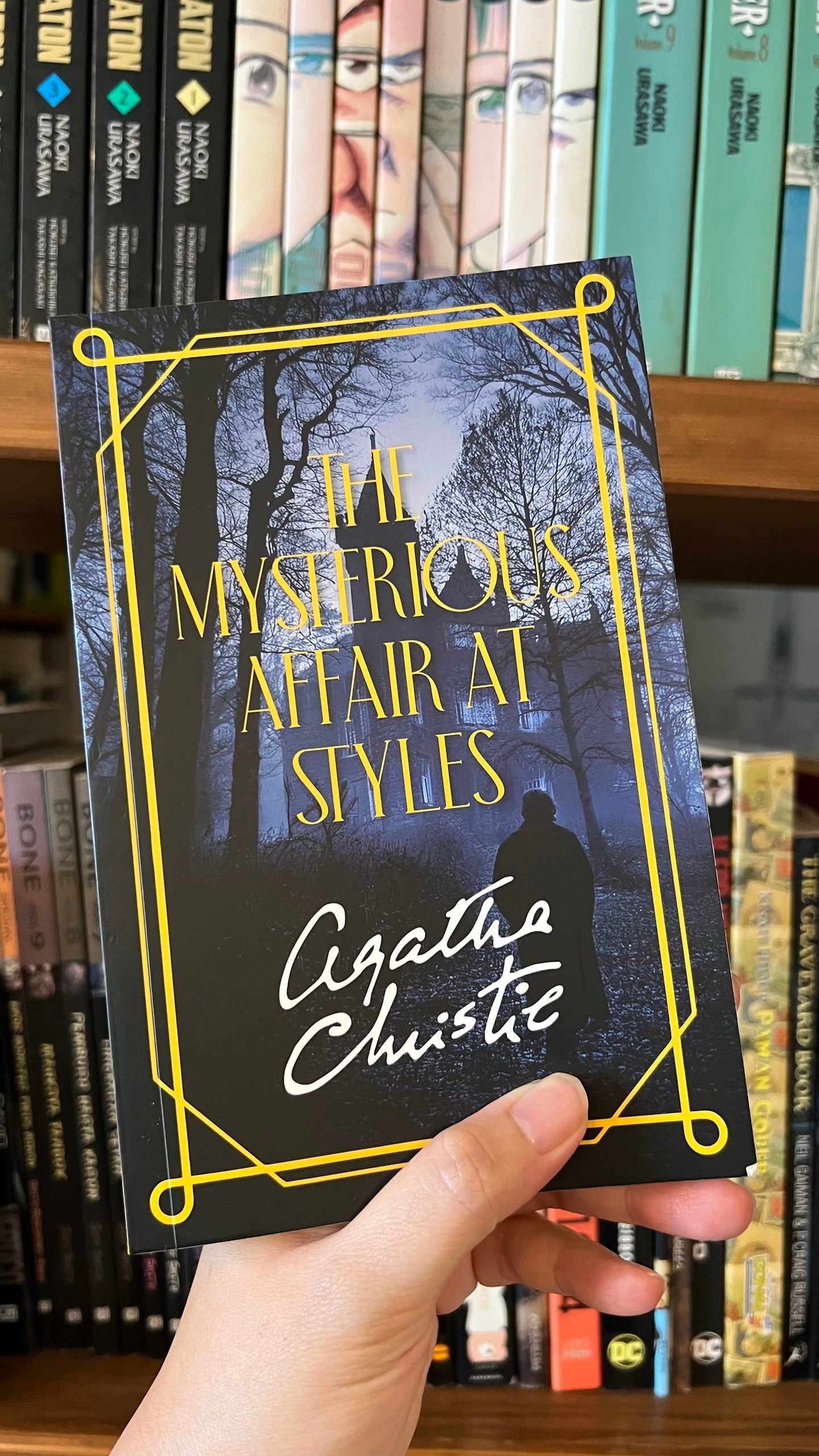

When reading “The Mystery of the Blue Train”, I learned that Agatha Christie’s, and Hercule Poirot’s, very first debut novel was “The Mysterious Affairs at Styles”, so naturally, I cracked open the book to see more of the introduction of the great detective.
I must say, Ms. Christie definitely opened it with a bang. Right away, smack dab in the middle: A murder in a closed, locked room. Fans’ favorite. I love how this type of case was the starting point for Agatha Christie, as she then proved to be one of the experts, if not the expert, on closed-room murders. That said, considering this novel was her debut, things were still quite… a lot. So many elements moving and going; Lawrence Cavendish stood over with such horror on his face, the matter(s) with cocoa and coffee, so much strychnine, fight 👏 fight 👏 fight, burned documents, missing keys, espionage, and l’amore.
Not as bad as the Screaming Marmot meme, I did find myself going, “HMMMMMM?! HMMM???!!!” whenever I see Hastings simping (sorry, can’t help it) over Mrs. Cavendish. First, dude, she is your friend’s wife. WIIIIFEEEE. W-I-F-E. What was it? Oh yeah, matrimony bond, witnessed by humans and God. Why are you simping on her it’s beyond me. Was it fashionable during World War I considering so many men were being sent to the frontlines, I don’t even know. Then, just like flipping one’s hand, this man, Hastings, suddenly proposed to Cynthia Murdoch just because she said that Hastings “has always been so kind, and you know such a lot” and he saw her “with the sunlight glinting down on her head”, which was enough for me to yell, “WHAT THE ACTUAL F–” which I couldn’t continue because I was in the middle of a pedicure session.
That said, yes, I know, debut novel. Yes.
My favorite part of this novel, though, is Ms. Christie’s knowledge of the procedures; started from the autopsy, the inquest, and when Scotland Yard got involved. I also loved the fact that Ms., Christie had been so true on writing about her women characters, and how complex the women are. I also mentioned about how often the fatal poison, strychnine, mentioned in the novel, and I got so glad that Poirot admitted that, too.
“I do not know,” said Poirot. “But one thing does strike me. No doubt it has struck you too.”
“What is that?”
“Why, that there is altogether too much strychnine about this case. This is the third time we run up against it.”
— Chapter 10: The Arrest
This novel also taught me an important lesson: Hercule Poirot is an immigrant.
“Yes, my friend, she had kindly extended hospitality to seven of my countrypeople, who, alas, are refugees from their native land. We Belgians will always remember her with gratitude.”
— Chapter 2: The 16th and 17th of July
Leave a comment