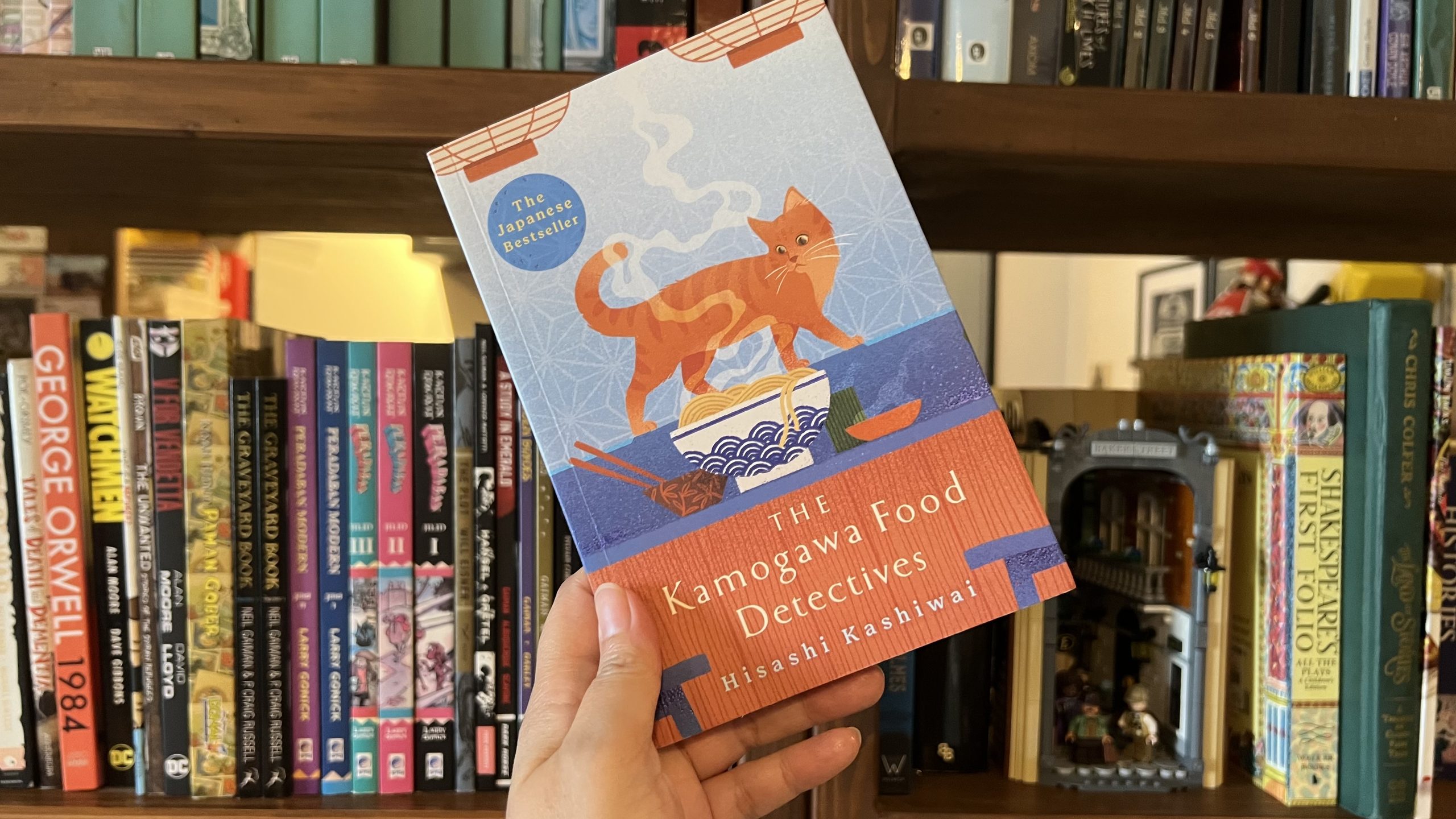

I was in the kitchen, preparing for dinner, when Ari entered the kitchen and said, “There is this chef– wait, perhaps a competitor in a cooking competition. They prepared sashimi, right, and for some reason, the judges were like, ‘ Your sashimi is good, but you will need to elevate it more.’ How do you elevate a sashimi? It’s a raw and cold dish.”
I’m paraphrasing, but you know the gist.
That said, that was exactly my thought, too. I can understand if it’s beef tartare or carpaccio, but sashimi? The only thing I can think of is either you use a God-level technique (IDK, your knife skill is on par with Zoro from “One Piece”, I guess?) or catching a legendary-level tuna that people would mistake for a legendary Pokemon. Or add more wasabi? Perhaps?
Anyway! It reminds me of this book that I finished last month-ish. I was hemming and hawing on whether I should write anything about this novel on this blog, mostly because this novel is… different. It’s not a bad novel; it’s just different from what I expected in the beginning.
This was the novel: The Kamogawa Food Detectives by Hisashi Kashiwai.
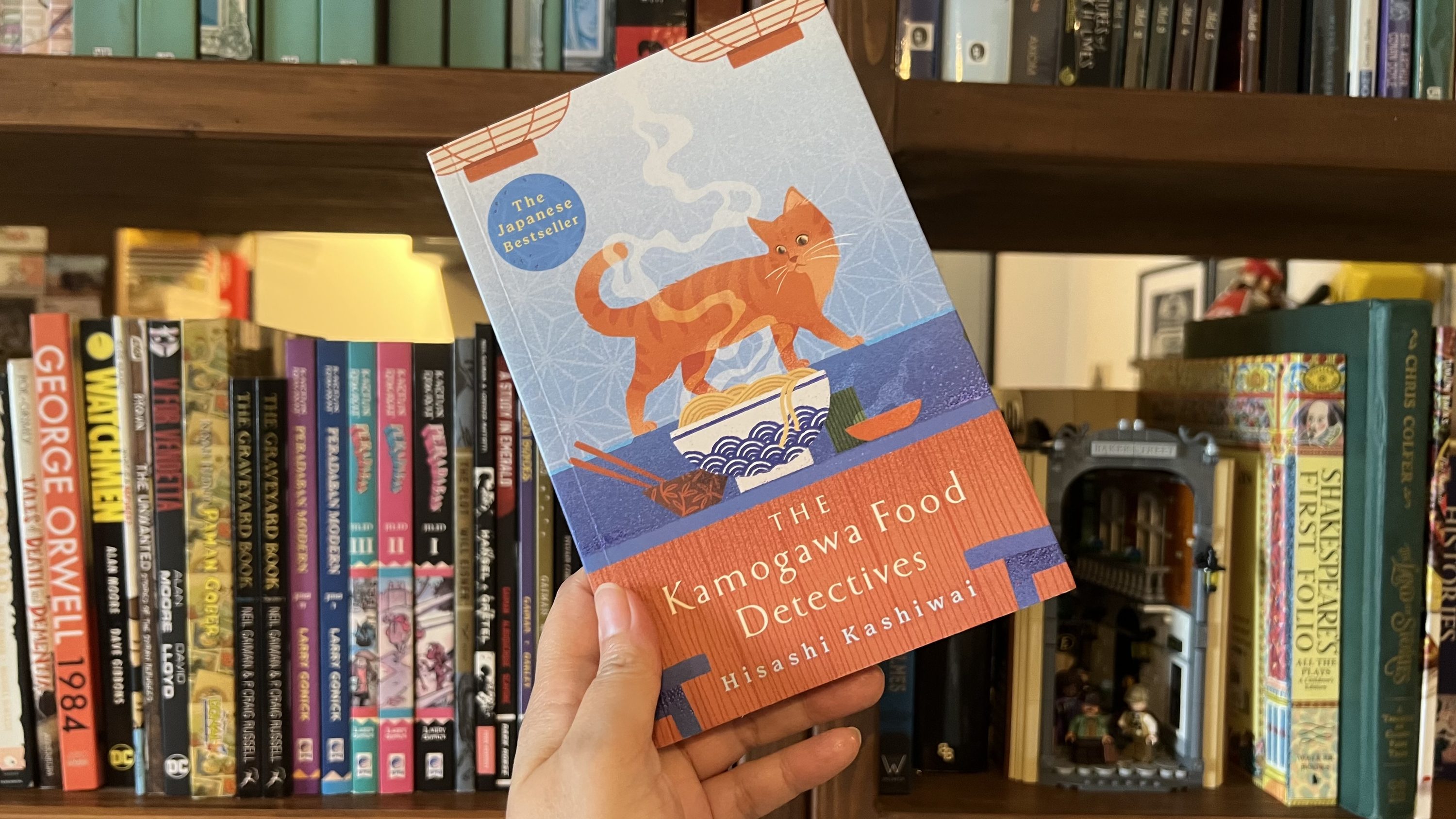
I must preface this “review” with a disclaimer: I approached this novel with a different expectation and it does not make this novel, and anyone involved in bringing this work to the mass, should be seen as less than extraordinary.
I thought this novel was about a beat-up detective or Private Investigator working on criminal cases, and throughout their investigation process, food was one of the central elements in their daily life. Think… “The Cat who Solved Three Murders” by L T Shearer, a.k.a. Enid Blyton meets murder mysteries.
… Or Lisbeth Salander with IKEA furnitures on “The Girl with the Dragon Tattoo”. OK, too far fetched, but you get what I mean.
Apparently, the novel is about a father-and-daughter duo helping their clients unlock memories from dishes. The father, Nagare Kamogawa, was an ex-police and the chef of the Kamogawa Diner; a diner that also served as the front of the detective agency, run by Nagare’s daughter, Koishi Kamogawa. Food, as expected, plays a central role in this novel. The scene always started with the potential client entering the diner, getting curious about how quiet and unassuming the place was, trying the meal prepared by Nagare, then sharing their issue or request with Koishi at the office at the back of the diner. Then, two weeks later, the client returned to the diner, with Nagare and Koishi managed to find the dish they had been looking for.
In summary, I initially thought the novel would be a mix of “CSI: Las Vegas” with Anthony Bourdain’s “Parts Unknown” (I would blame myself for watching “CSI: Las Vegas” one episode too many), but then I got episodes of “Midnight Diner” with food research instead. No regrets, honestly.
Now. My favorite part of the novel is when the client is tasting Nagare’s dishes for the first time. I feel this is where Kashiwai-sensei is bringing out the sense of Kyoto and what this ancient town has stood for in the Japanese culinary world.
As Hideji’s gaze skipped between the various dishes, Nagare went on:
‘Stewed arame and deep-fried tofu. Okara croquettes. Kikuna leaves dressed with sesame and miso. Kurama-style sardine. Hirosu tofu bal in broth. Pork belly simmered in Kyobancha tea. Fresh tofu curd with sour plum paste. Oh, and Koishi’s rice-bran-pickled cucumbers. Nothing too extravagant. If anything, the highlights are probably the firmly cooked Goshu rice and the miso soup with ebi-imo taro. Anyway, enjoy the meal. Oh, and make sure you put a good sprinkle of sansho pepper on the soup — it’ll warm you right up.’
His eyes gleaming, Hideji nodded along to Nagare’s every word.
— Chapter 1: Nabeyaki Udon
As an Indonesian living in Malaysia, I believe the food mentioned above would look great, but it won’t hit my taste buds as strongly as I would like, simply because I’m used to spicy food, drenched with chili sauce and strong flavor. Does it make the food mentioned above less superior than the one I would eat daily? Heck, no.
On the contrary, I appreciate the simplicity of the meal explained above. This part: “… If anything, the highlights are probably the firmly cooked Goshu rice and the miso soup with ebi-imo taro.” How many people could show off plain steamed rice and miso soup as the highlight of their whole repertoire? If anything, this shows the Japanese culinary world as delicate and as as-it-is. In the Japanese culinary universe, you won’t, and don’t, need additional spices or herbs to “elevate” your dishes. Your dishes will do the talking with their main ingredient. Does it mean that the Japanese would reject spicy food or food with strong flavors? Not really, no. You might want to watch a J-drama titled “Gekikaradou” (The Way of Hot and Spicy) — and I must add that Sapporo’s curry soup is one of the best dishes in the world, but in the end, when we are talking about traditional Japanese food, in this case, sashimi, such additional spices might not be needed. Different way of preparing, perhaps. Not always in terms of adding spices or flavor extensions.
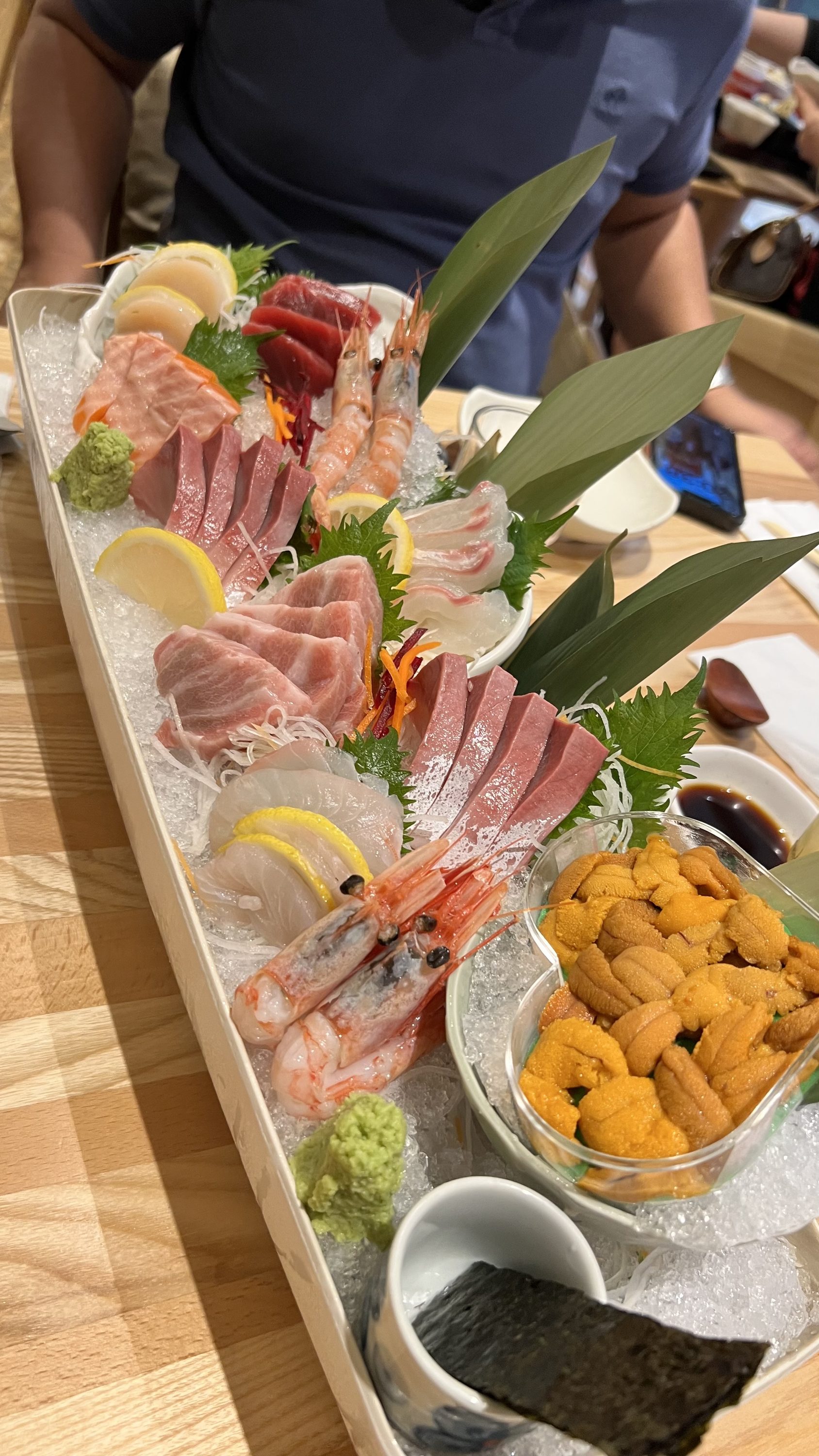
Such focus on Japanese food in the novel has been so prevalent, hence my confusion when Ari mentioned that a cooking show judge said that “the sashimi could be elevated”. I know most Japanese would kick me for adding shoyu on my chawanmushi (I can’t help it! At least the shoyu would give a bit of a nice saltiness to the egg pudding), so I honestly don’t see the need to “elevate” a plate of sashimi. Sashimi, inherently, is a dish served with such respect for quality and skill, and I honestly believe that the only way to elevate a plate of sashimi is by having it directly at the fish market with a cup of ocha in the wee hours in the morning, just as the fish market opens.
While we are on the topic of this novel, I also want to highlight the… subtlety in this work. If you are familiar with the Japanese’s concept of honne and tatemae, you might able to pick them up once or twice throughout this book, hahah. My favorite:
‘What kind of food do you serve?’ asked Suyako, eyeing the ramen bowl that had been left on the counter, in which a small pool of broth remained. ‘I’m afraid I’m a little fussy.’
…
‘Well, if you’re happy with something light, I can serve you right away.’
‘That’d be just fine. I eat like a bird,’ said Suyako, a relieved look on her face.
…
‘Apologies for the wait,’ said Nagare, arriving with the food. ‘I’ve prepared a selection of light dishes.’ He began removing a series of small plates from the round tray he was carrying and positioning them in front of Suyako.
‘From top left,’ began Nagare, tucking the tray under his arm, ‘Miyajima oysters, simmered Kurama style, miso-glazed baked butterburs with millet cake, bracken and bamboo shoot stew, chargrilled moroko, breast of Kyoto-reared chicken with a wasabi dressing, and vinegared Wakasa mackerel wrapped in pickled Shogoin turnip. In the bottom right you have a hamaguri clam broth thickened with kudzu starch. … Today’s rice is from the Koshihikari variety, sourced from Tamba.’
…
Once Nagare was out of sight, Suyako took the Kurama-style simmered oyster and placed it on top of her rice, then poured some tea over the bowl and began bolting it down. With the occasional paise to sample the wasabi-dressed chicken breast, she emptied the bowl entirely, right down to the last grain of rice.
‘More rice?’ asked Nagare, who had emerged from the kitchen again and was extending his round tray in her direction.
— Chapter 4: Tonkatsu
I love how Kashiwai-sensei presented a contrast in such a fleeting way with several paragraphs. We see the character Suyako, trying to show how delicate she is by saying, “I’m a little fussy” and “I eat like a bird”, but ended up clearing down a whole traditional set menu. If you are familiar with Japanese dishes, you would know that a Japanese regular set menu meal is… a lot. It usually looked like this at minimum:
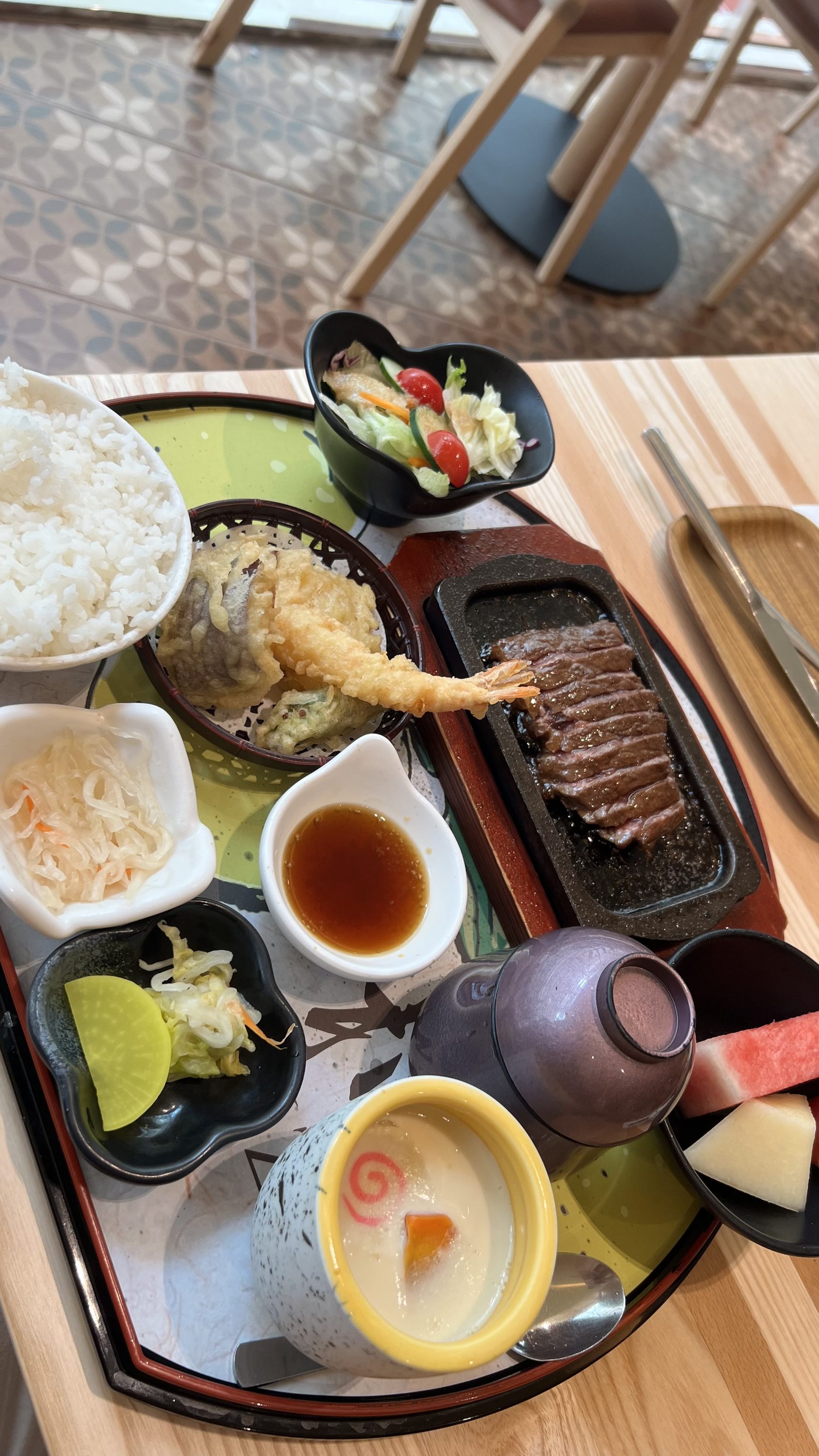
While it can also be seen that it could be mean Nagare’s cooking skill is really good since Suyako, who might rarely eat heartily, managed to finish the whole set meal, it shows how most Japanese are expected to behave and say things in a certain way to uphold their image, yet when being face to face with a delicious meal, one would not be able to resist.
As a whole, this novel is interesting in the sense that this specific genre, cozy mystery, is a new area for me. I do have favorites, though! Nita Prose’s works are some of my favorites (I know I have written about “The Maid”, and I am yet to write about “The Mystery Guest” and “The Mistletoe Mystery”. I promise I will do that. Sometime later. Ish) and Hisashi Kashiwai’s works would be a great additional on the book shelves. As a matter of fact, I have another one here: The Restaurant of Lost Recipes.
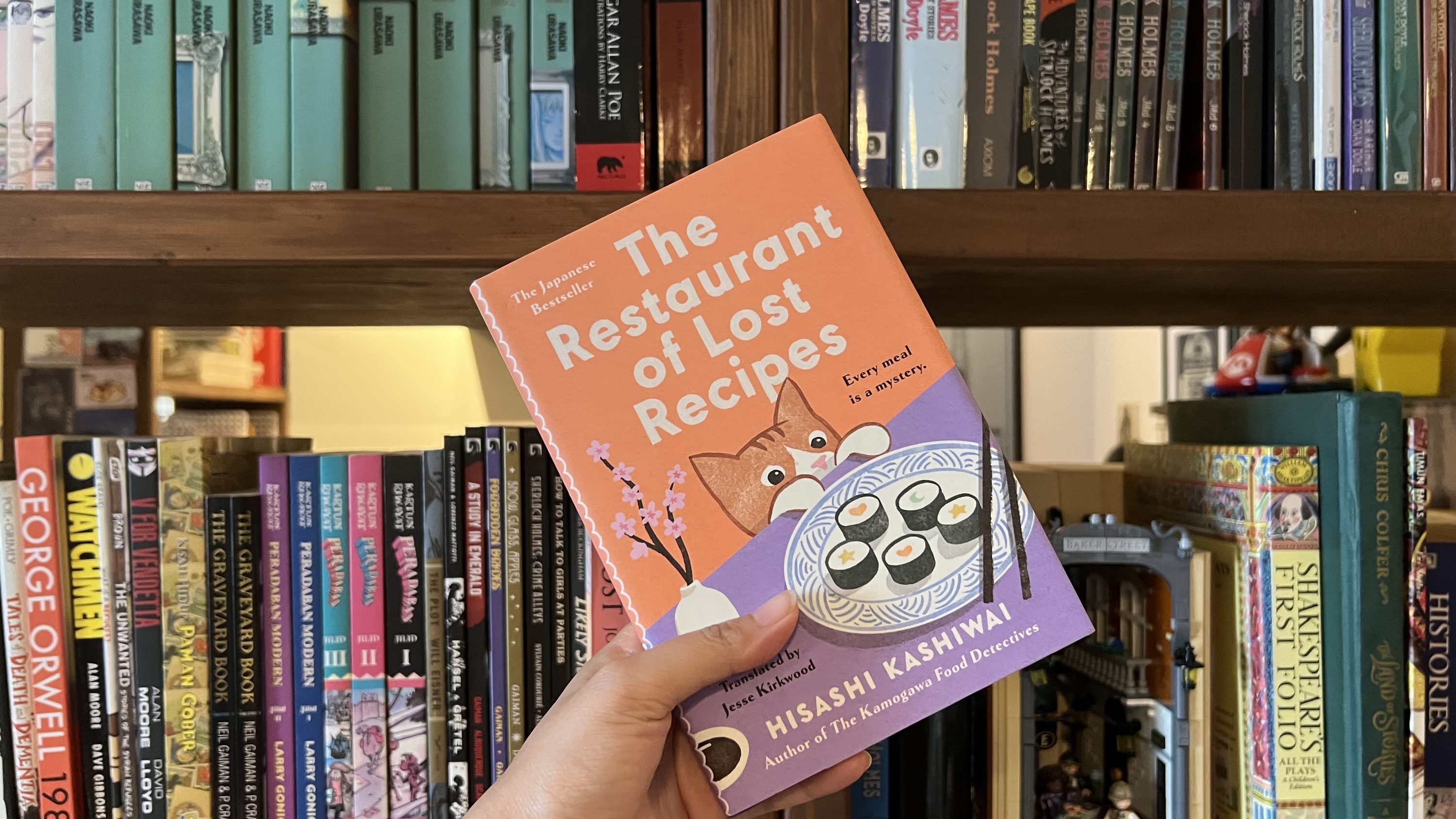
Yes, I know. Will read it. Will write about it. All that jazz. Yes.